Archive for the ‘Gilbert and the Media’ Category

Letter to China Daily 31 August

Wednesday, September 1st, 2010

Guess what…. China Daily did publish my letter, though modified. I just wonder why they made certain modifications.
I’m not complaining too much as the essence of the message was kept.
You can check with the original version posted earlier. See here what was published:
http://www.chinadaily.com.cn/usa/2010-08/31/content_11233134.htm

Being:

Letters-Rethink over foreigners needed
Comment on “Foreigner communities” (China Daily, Aug 25)
I doubt that there were 20,000 “green cards” holders, that is, foreigners granted permanent residence permit in China, by 2004. Official figures for 2009 show a total of 311 “green card” holders in Beijing. Figures for Shanghai are most probably similar, but could be a bit higher. As a matter of fact, China has almost stopped issuing “green cards”. Applications are accepted but permission rarely granted.
A consequence of the near non-existence of such card holders is the weird experience of using it. Most airport security officers ignore its existence and ask people to produce their passports. The lack of training on the part of security officers and others makes “green card” holders a discriminated rather than a privileged lot.
Some Chinese people’s worry over the impact of foreigners on China and their call for a new “immigration law” to limit the influx of foreigners would only paint a bad image of China.
Reliable figures on foreigners in China are not available. Beijing is said to have more than 110,000 long-term foreign residents. Figures for Shanghai may be higher. The latest official figures (2007) show 538,892 foreigners have been living in China for more than six months. I believe the real figure is much higher, considering foreign students and many unaccounted for foreigners. Even if we assume a total of 1.5 million foreign residents in China, that is a drop in the ocean compared to the Chinese population of more than 1.3 billion.
If China wants to be an open and international society and part of the world community, some of our Chinese friends have to rethink their attitude toward foreigners.
Gilbert Van Kerckhove, via e-mail

Gilbert & Sun on CCTV9

Monday, February 15th, 2010

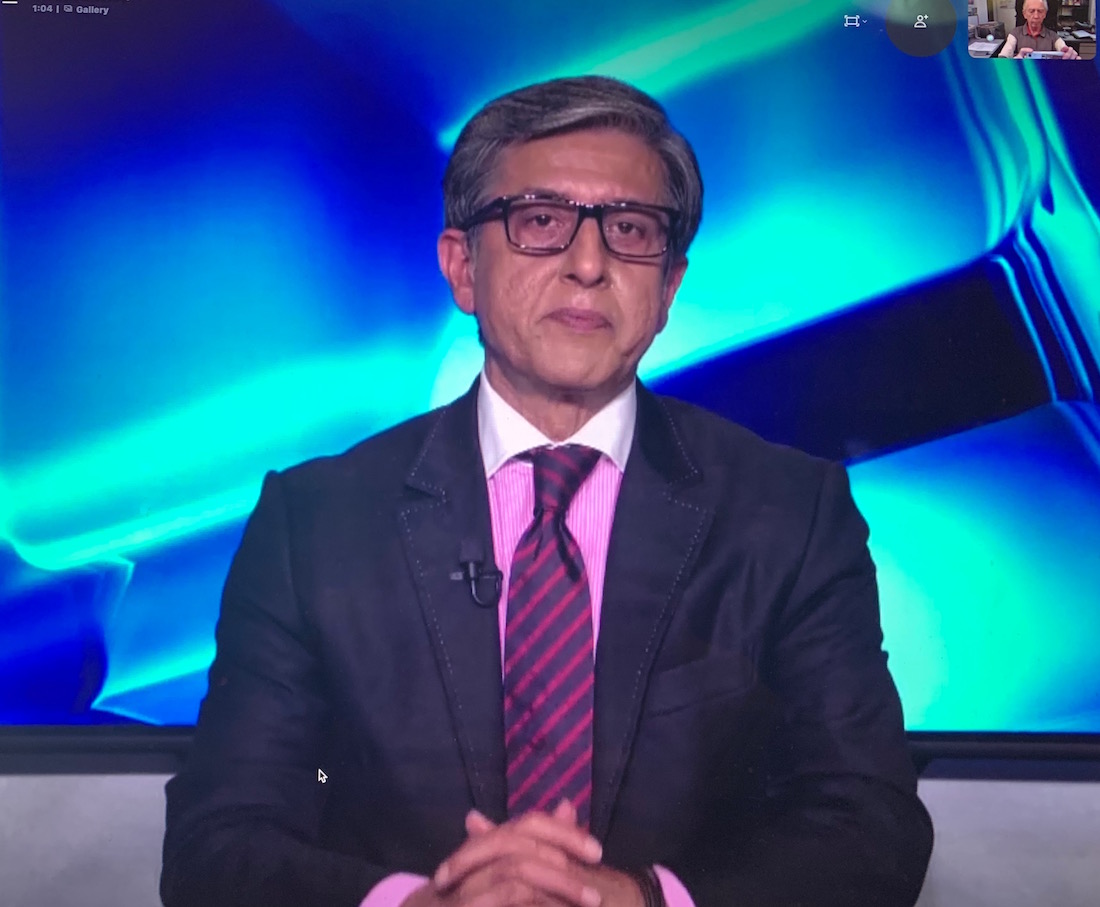
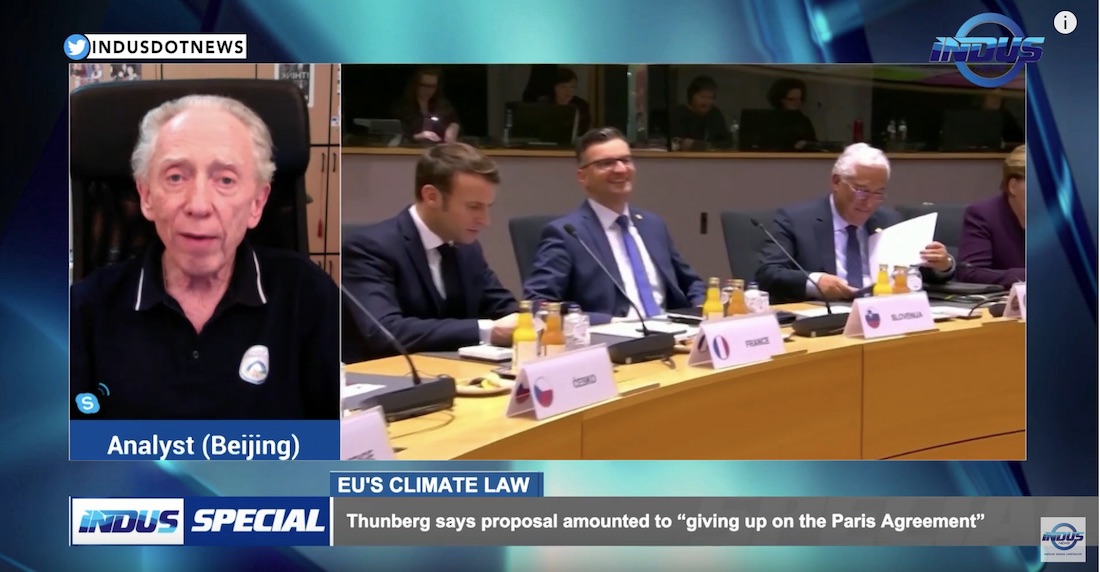
On Chinese New Year day (14 February, if you didn’t know) we were 3 times on CCTV9.
It was a new format, like a spontaneous discussion. I was soso convinced about it, but the program turned out quite OK, and lasted nearly 20 minutes (double the time we were told before). The idea:
“On the eve of Chinese New Year, you are invited to a tea party at Ms. Jehanne De Biolley’s (a Jewelry Designer located in Beijing) house. And each of the guests brought a small gift (please choose one gift that has the characteristic of your home country).
Once everyone is inside the house, we will start with exchange of your gifts. This will be followed by talks on “made in China”. You could think about what does “made in China” mean to you, how has its image has changed in the past few years.”
I brought Belgian chocolate (Cote d’Or) and cookies…


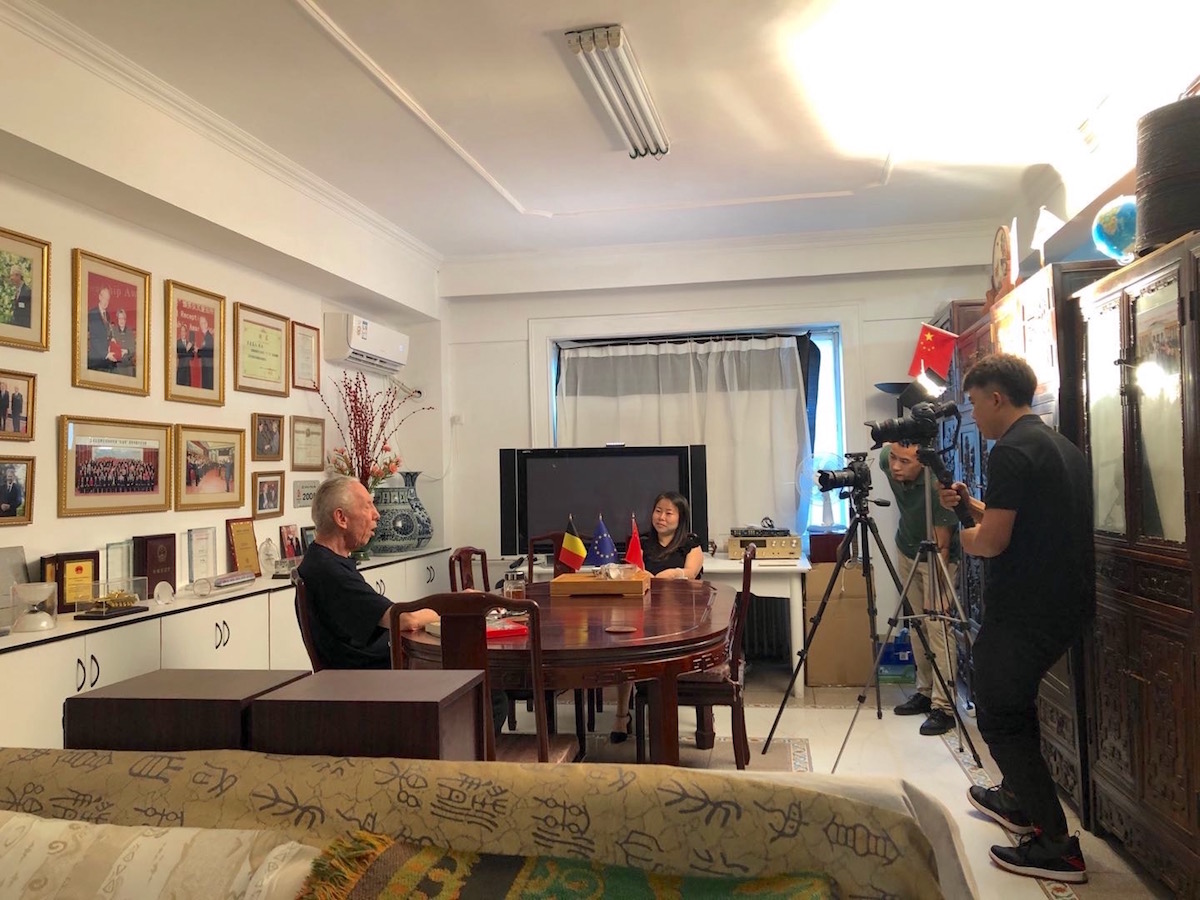
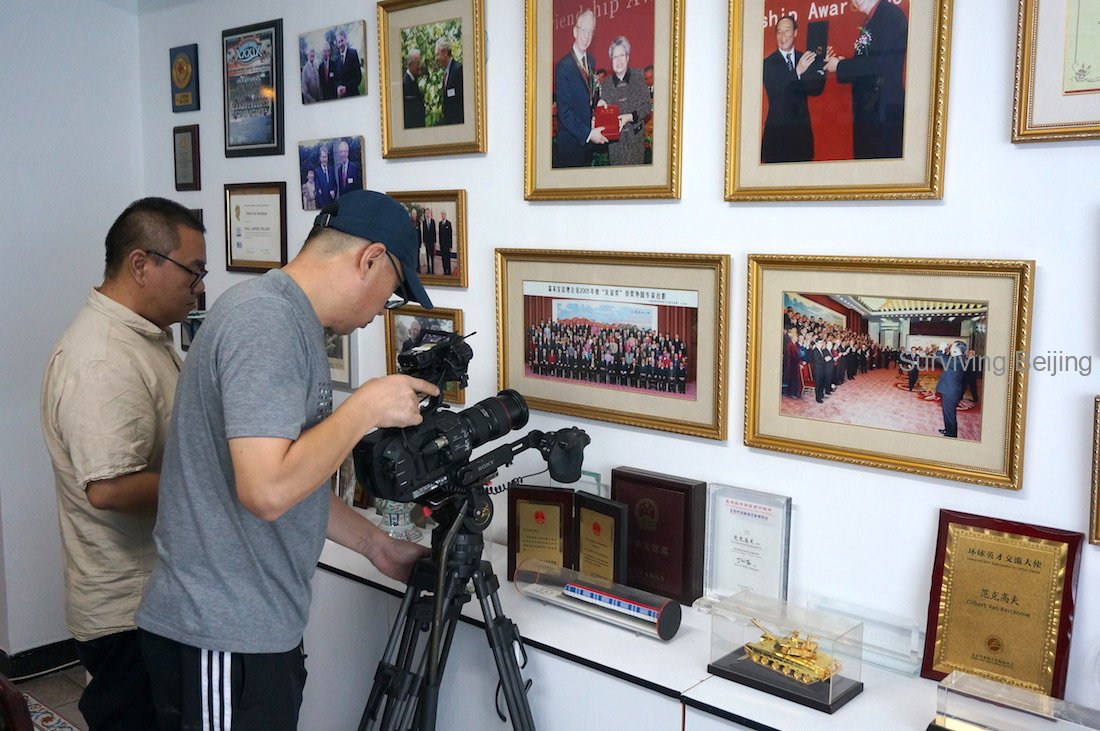
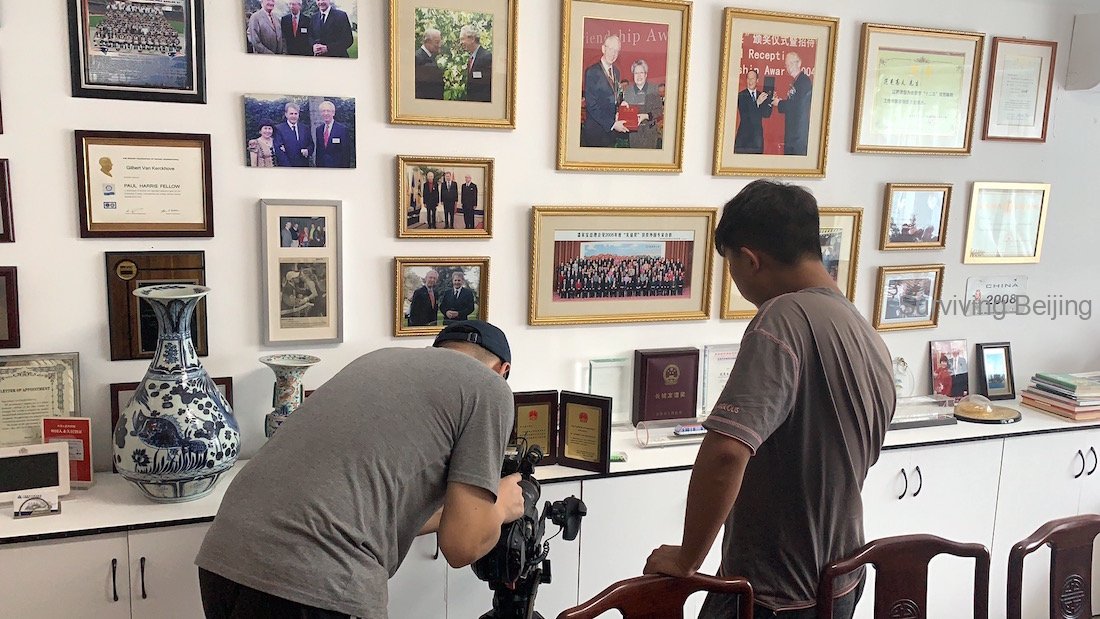
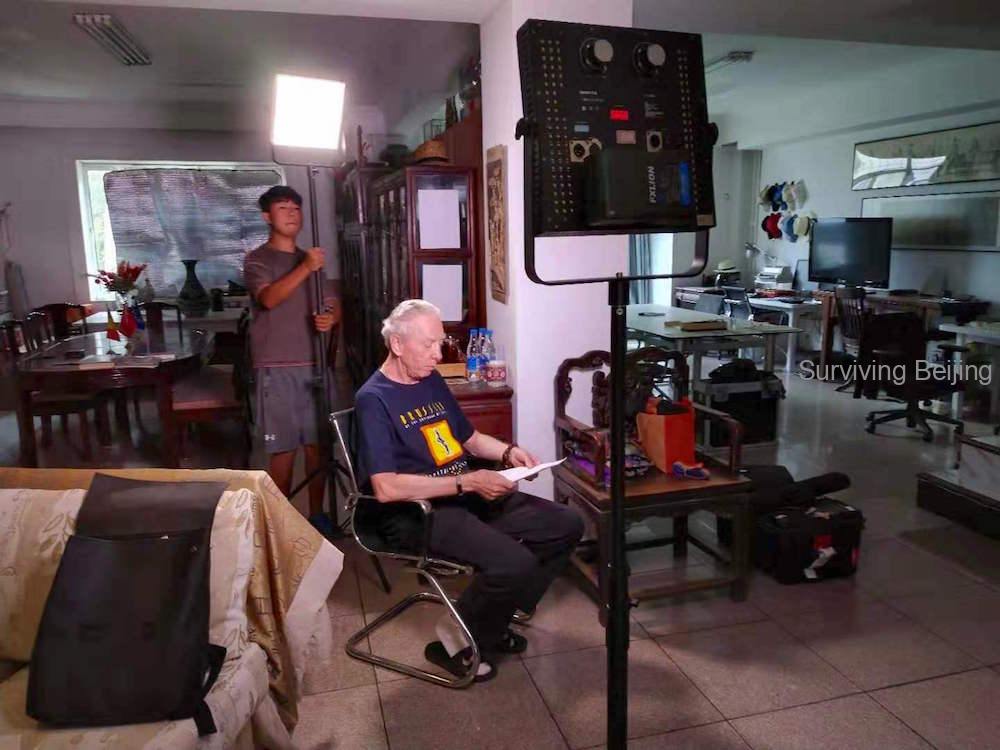
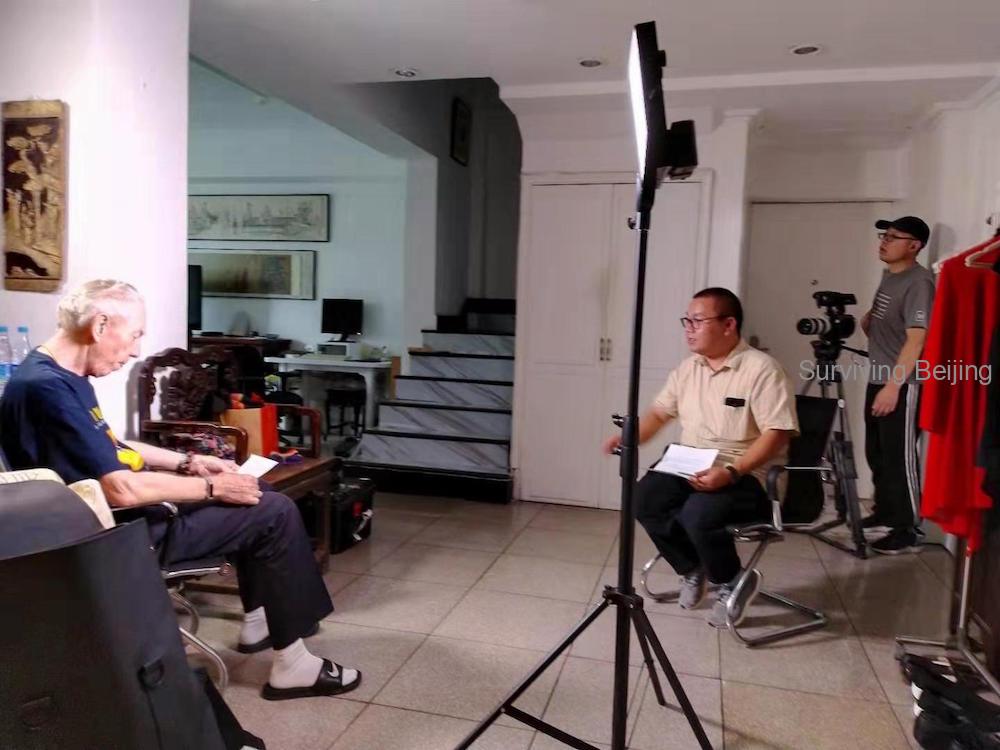
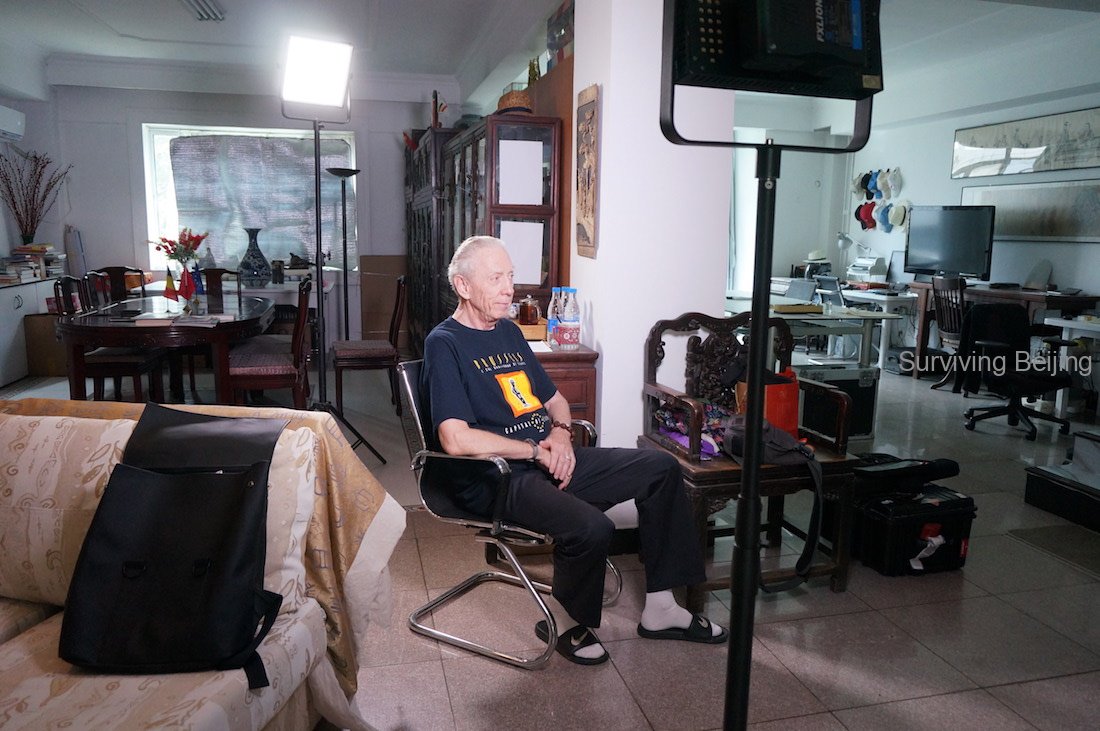
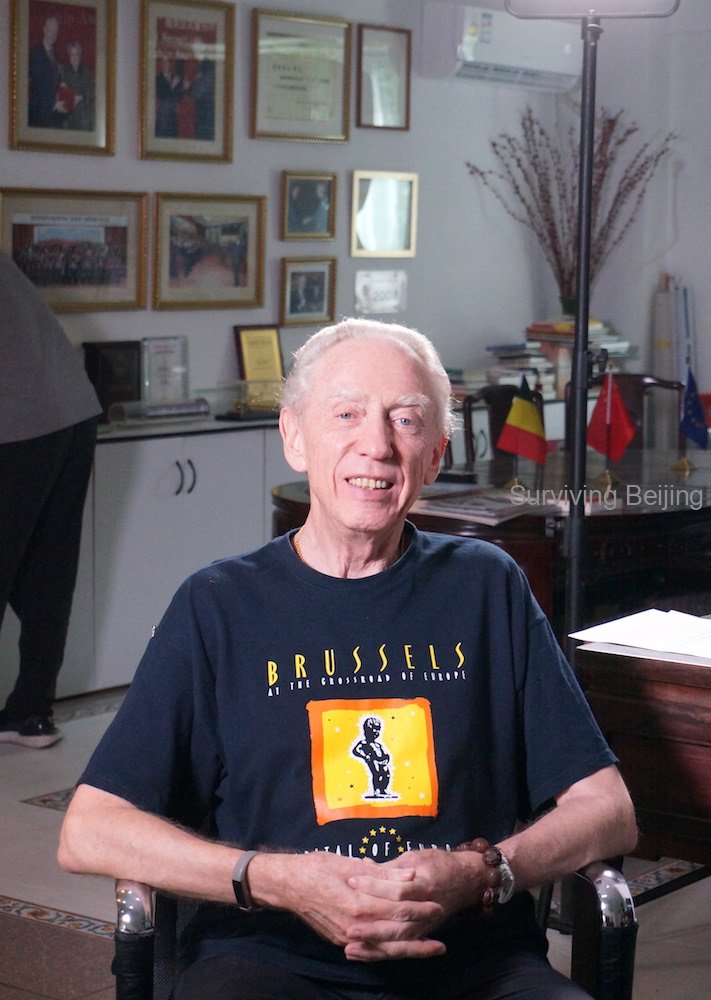
Part of the pics are from the actual shooting (28 January), the others are TV screen shots.

Host: James Chau CCTV – World Insight (nice and friendly)
Location of the shooting: a Ming Dynasty Siheyuan in a hutong close to Qomolangma Hotel, Gulou Xi Dajie (Drum Tower area), atelier and home of Jehanne.

It was sad to see that part of the centuries old building had just burned down (probably due to bad electric wiring from Chinese neighbors), destroying a lot of Harrison’s personal belongings and work. I cannot imagine how firefighters could even come close to the building. The buildings are impressive, see the old beams. Impressive too is the interior done by Jehanne and Harrison.

The guests:
1. David Tool, a professor teaching at China International Studies University (USA);
2. Gilbert Van Kerckhove, “a businessman” (Belgium)
3. Sun Bin, Gilbert’s wife (Belgium/China);
4. Cem Aygun, a lecturer at China Foreign Studies University (Turkey);
5. Scott-H Olson, Emerson (Beijing) Instrument Co., Ltd. (USA)
6. Jehanne de Biolley, jewelry designer located in Beijing (Belgium);
7. Harrison Liu, husband of Jehanne (China)
8. Severine Perrennet – French assistant of Jehanne (France)

The top 60 foreign experts in China

Saturday, February 13th, 2010

One more. I am listed in the special book that features 60 experts (60 years PRC…) in China’s recent history. A bit surprised but happy to be listed among some very well known experts.
The book is called “60 Foreign Experts in China”, published in 2009 by the Foreign Languages Press and compiled by International Talent monthly. Forword by Zhang Jianguo, Deputy General Director of the State Administration of Foreign Experts Affairs.
Listed are of course the “usual suspects” such as Israel Epstein, Sidney Shapiro, David Dollar, William Lindesay, Norman Foster, Edwin Maher and even Henricus (Hein for the insiders) Verbruggen.
foreignexpert1
Download the pdf (I made a scan) of the book with my “story” in English and Chinese:
2009_60experts.pdf
For those who read Chinese, see also the article published in “International Talent” in October 2008:
081001talent.pdf

Gilbert on the Internet in Global Times

Monday, February 1st, 2010

See here the link for the so-called “interview”:
http://opinion.globaltimes.cn/commentary/2010-01/501163.html
Oh well. I told them not to bother me anymore. Or am I too sensitive?
(see previous post with the full interview text)

The Google polemic

Wednesday, January 27th, 2010

Global Times “interviewed” me. Despite the assumption I would have 700 words, nearly all was dumped. Won’t respond to their interviews anymore.
Recent developments make us worried. It’s getting hard to defend China.
See here the full text.

The Google polemic – by Gilbert Van Kerckhove – for the Global Times
(original and edited version – only a tiny part to be published)
“It’s not so Google that’s withdrawing from China, it’s China that’s withdrawing from the world”.

The tone between China and the USA is becoming more confrontational.
China is trying to deflect criticism by demanding respect for its national laws and by playing the victim of repeated cyber attacks.
For people who believe in China and try to counter at least some of the unfounded media and political attacks, it is becoming a tough task.

According to the Chinese Foreign Ministry, “Chinese Internet is open and China has tried creating a favorable environment for the Internet”.
This is a ridiculous statement that tarnishes China’s image, aspiring to become a leading economy through innovation, creativity and the continuous development of its industry and trade.
International security specialists point at indications in software codes and the purpose of the cyber attacks, such as trying to steal data (the recent news on U.S. oil companies that were “tapped”),  clamping down on dissidents, controlling journalists and on any “unwanted” information. Invoking the fight against pornography is seen as an excuse.

Google’s move is applauded by those who are tired of the Internet restrictions. Many websites, vital for business and research, are blocked, despite promises for the 2008 Olympics. Even SMS would be subject to censorship, a direct invasion of privacy. But little is done to stop the proliferation of junk messages offering fake invoices and real estate deals.

But the dispute brings into the open the rights of netizens and a debate on censorship.
By erecting the many barriers to the globalization of information, China is sterilizing the local Internet and shows insecurity and self-confidence, making China haters happy as it seems to prove their opinion. Clamping down on the Internet looks like advocating to ban all car traffic because it causes accidents and road deaths.

Said senior White House economic adviser Lawrence Summers:
“It seems to me that the principles that Google is trying to uphold are not just important in a moral or rights framework, but are also of very considerable economic importance,” He said that information flow is central as the economy on the mainland matures and transforms from industrial-based to more knowledge-based.

Liu Deliang, an internet law professor at the Beijing University of Posts and Telecommunications:
“It is fair to say that the government’s control over the internet and the flow of information is way too strict, and the way authorities regulate cyberspace will have a negative impact on the people’s confidence in the political and legal systems.”

China has to make a choice to take up a responsible and confident leadership role or to decide if the country should be inward looking, losing out to the new Internet world. Favoring Chinese search engines will affect many serious business people and researchers. Google.com and some of its services (e.g. gmail) will still be available in China, unless China starts blocking them as it did with other services.

It is unlikely that other major U.S. companies will follow Google but they will need to review operations. The USA has strongly appealed to take a position in favor of an open Internet, as explained by U.S. Secretary of State Hillary Clinton and President Obama. The issue does not need to be blown up as a massive anti-China strategy.

China should educate its netizens, combat hacking, cooperate with other countries on international cyber attacks, moderate biased nationalistic bloggers and curtail spam SMS.

In the West, a voice is coming up to make it a WTO case because China erects one more trade barrier through its Firewall.
Foreign chambers of commerce increasingly worry about trade protectionism in China. While China claims to suffer from trade protectionism it erects its trade and Intellectual Property Rights barriers to impede fair market access. The recent “Joint circular (Notice No. 618 – Ministry of Science and Technology, National Development and Reform Commission and Ministry of Finance), establishing an Indigenous Innovation Product Accreditation System” is a perfect example, among others like the encryption debate. China would be wrong to think only the USA is losing patience. Europeans could soon follow.

China can buy a radio station in the USA. And here? Foreigners face here many limitations while Chinese companies go abroad and invest in mining, carry out construction projects in a way foreign companies would never be allowed to in China.

Expect a backlash, rather sooner than later. Of course China will appeal to the “nationalistic feelings” of its citizens to get support.
I hope a solution can be worked out discreetly and calmly.