Just got a copy of a 10 page report on the preparation of Beijing’s 2008 Olympics, written by the firm Cushman & Wakefield (“Global Real Estate Solutions”):
“After The Games are Over – Feast or Famine? Will Beijing suffer the fate of past host cities or will the games add to the momentum of this growing city?”
Author is said to be Rachael Jones, based in the Shanghai Office. Well, maybe that’s why.
The report seems to be based on solid research, including the experiences of past Olympic cities and comes up with – at face value – convincing figures and statements.
Unfortunately, many of them are plain wrong. It repeats the typical distorted view on the cost of the Olympics (see earlier entry in this blog!), completely misunderstands the so-called “frugal” approach for the stadiums (creating the potential disaster for post-Olympic operation), misses the real risk factors in the post-Olympics, etc. At a first glance, the analysis of the hotel sector also seems dubious.
I did a very detailed study on the former Olympic cities on behalf of the Beijing Government (see our website and the brief about me) as well as a review of the main economic issues for the post-Olympic economy. I also visited some of the locations and discussed with the local governments.
The other curious conclusion (for somebody who is supposed to understand Beijing!) is the impact of the Olympics on the residential real estate. Luckily this is in part corrected by pointing out somehow the underlying need for new housing that has nothing to do with the Olympics.
Our firm had just a series of meetings with real estate investors from different countries and the point of view on the local market were, well, very different.
Well, all good for my ego. Just confirms to me how few people understand what has been going on here, what are the challenges for the Beijing economy – and the real estate sector. So, I better charge more – right people?
Or maybe simply write that book. Well, maybe not. Some people here might not be so happy…
Julong Garden: kingdom of Chinglish
Our compound is considered a “foreigner’s compound” – important because the more foreigners live here, the more foreign TV channels we are allowed to get. Yes, it sounds like a stupid rule and it is. So, as they don’t identify enough laowai, we get just HBO, CNN, TV5 and a Japanese channel.
The management is very typical “Chinese”. In other words, very poor to mediocre. As an owner you have few rights and none to complain.
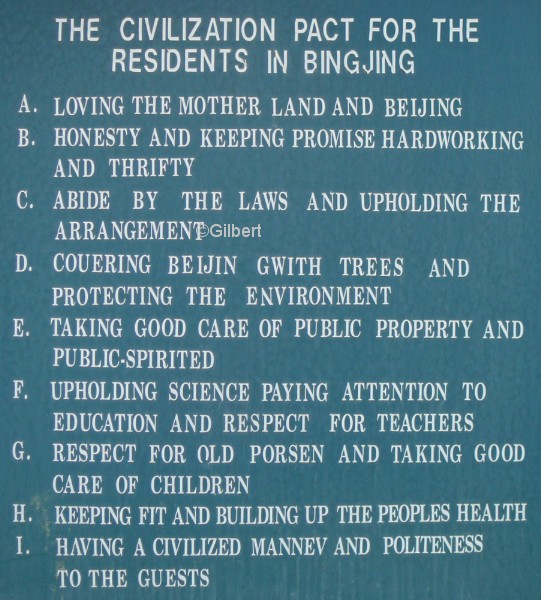
With all those laowais around you could imagine they easily find help to check their English announcements. Of course, silly you. They never ask the right people who probably would be happy to help. It is typical of the majority of Chinese organizations and explains the abundance of Chinglish signs, some meaningless, some the source of jokes.
Julong Garden, in its quest to keep up with Chinese management characteristics, has again scored highly with this latest panel. The security guards don’t understand the enthusiasm of the inhabitants of taking a picture of the announcement. Rome was not build in a day, neither was Bingjing.
Screening of “The Dammed”
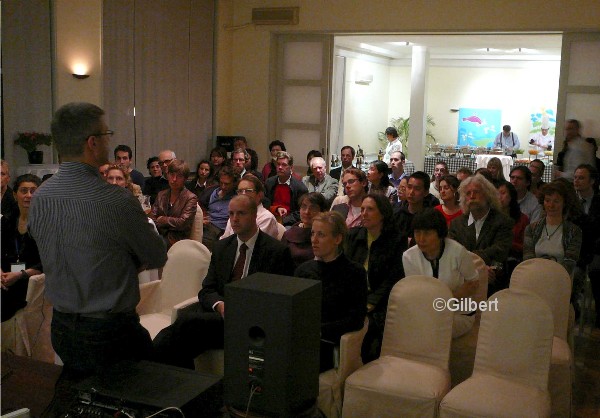
On 16 March, the Benelux Chamber of Commerce in China and Flanders Investment & Trade organized a screening of the movie at the Belgian Embassy, followed by a buffet from our beloved Morel’s Restaurant (thanks, Renaat). Leo De Bock presented the movie and answered many questions from the audience.
The multiple award-winning documentary “The Dammed” was filmed in 1995 by Leo De Bock, a renowned Belgian documentary maker.
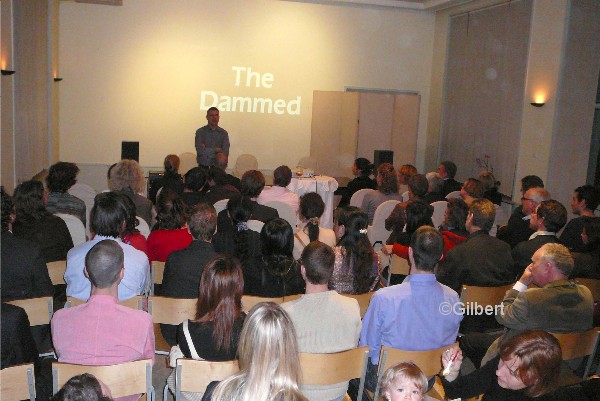
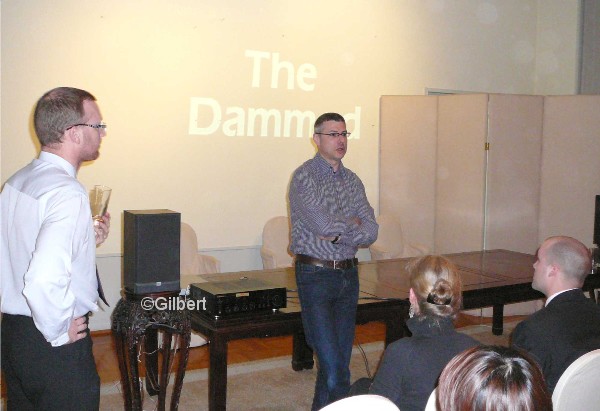
Siegfried Verheijke was also involved in the making of the movie. It focuses on the displacement of the local population affected by the construction of the Three Gorges Dam Project. While it says it tries to show a “balanced view”, obviously the Chinese government side loses out, thanks to the clumsy explanations from the government officials and “guides”.
Always difficult for me to give an assessment. We can expect unfortunate cases of mishandling the displacement, corruption, miscalculation in the planning of this huge project and more. That is, well, normal in China. It is a pity there is no good follow-up on the today situation of the Three Gorges Dam Project – how are people now really resettled (and compensated) and how is the impact on the environment and the local economies. The big question – was it all worth it. Of course the river is a killer but measuring the impact on energy generation and flood control are just part of the equation. Having been involved in several hydro projects myself, the real question is – will they be able to control the sedimentation of the lake. As far as I know, that will be very, very problematic. We might end up with lots of sand and little water behind the huge dam.
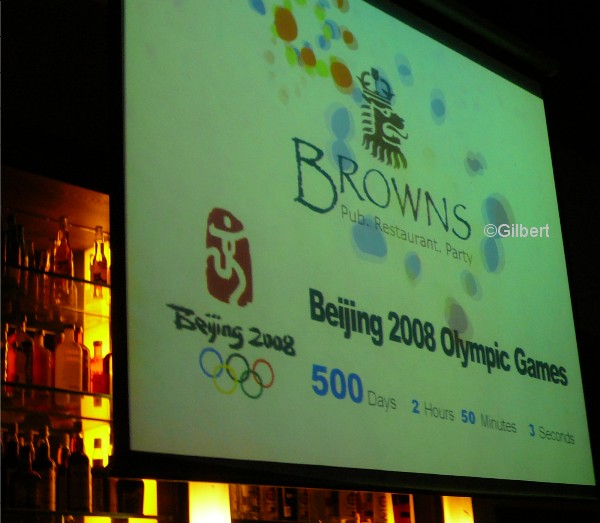
The 500 days countdown to the Olympics: in Browns
On the 27th of March, the European Chamber, AmCham, BenCham and other Chambers organized a joint networking evening at Browns. The pub was fully packed – 292 participants attended. This is one of the types of event I will still attend, if I feel like going out for a beer and relax with some of the friends I know.
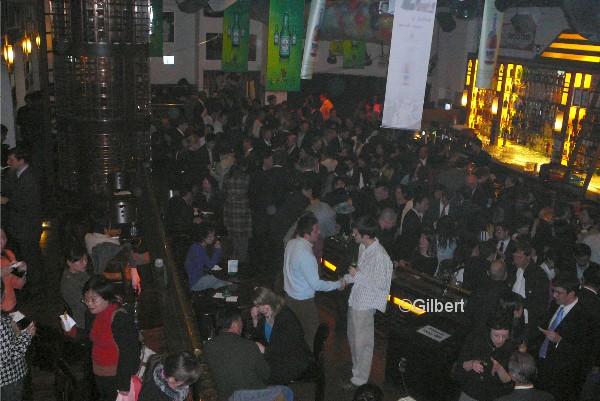
Contrary to many others, don’t expect me to go around and distribute my business card to the dozens of people around me. I prefer a chat, a beer, a glass of red wine.
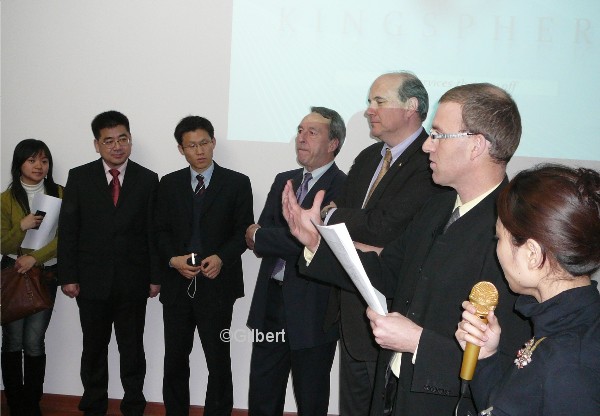
Opening of the Kingsphere International Business Services Center
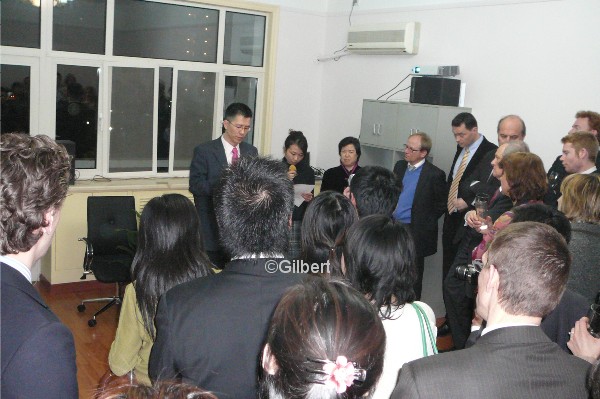
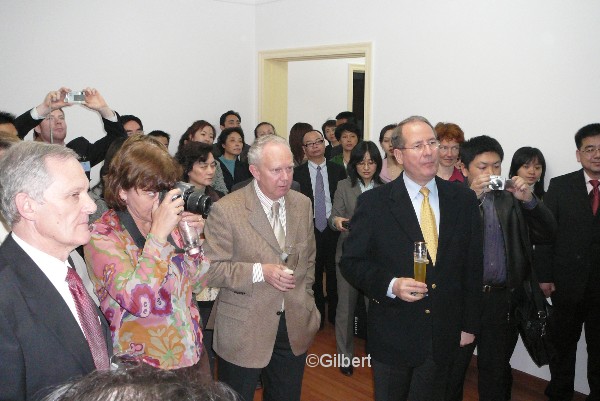
On 22 March the service center for SME company support in China was officially opened in the presence of Bernard Pierre (Ambassador of Belgium), Koen Allaert (Managing Director Flanders Investment & Trade – FIT), Siegfried Verheijke (chief representative FIT Beijing) and Zheng Rong (Public relations officer Kingsphere International Business Services Centre).
The Center has the support of the Embassy of Belgium and FIT Beijing and acts like an “incubator” for SME’s from the Benelux. Already three Flemish SME’s are using it and soon four more will join.
It is located in Jianguomenwai Diplomatic Compound 9-1-33, 100600 Beijing
Setting up a meaningful service center for SME is a challenge. I have been asked by several countries to make a proposal but we declined. Without proper subsidies the investment in rental, staff and equipment cannot be recovered as SME cannot afford substantial fees that would at least give some profit to the investor. The Kingsphere initiative is a good start. The location and setup are generally speaking nice and convenient – for foreigners. But for local Chinese there are difficulties to enter the diplomatic compound. The challenge is also for the Center to provide convenient services (Internet, telephone, copier, interpreters, etc.). All not that cheap in Beijing… if you want to do it well.
Some countries showed good examples, such as France (Région Rhône Alpes – in Shanghai) and Germany (The German Center in the Landmark).