Beijing versus Hangzhou: poor Beijing!

I went for a quick trip to Hangzhou on Friday, to join the Lenovo Torch Tour. I did not visit Hangzhou for many years but went there several times in the past, starting in the very early eighties. Coming from polluted, dusty and chaotic Beijing, something close to a shock.
Yes Hangzhou was hot, hot, hot. Temperatures went close to the forties in the shadow and the Lenovo event – held outside – was a real endurance test.
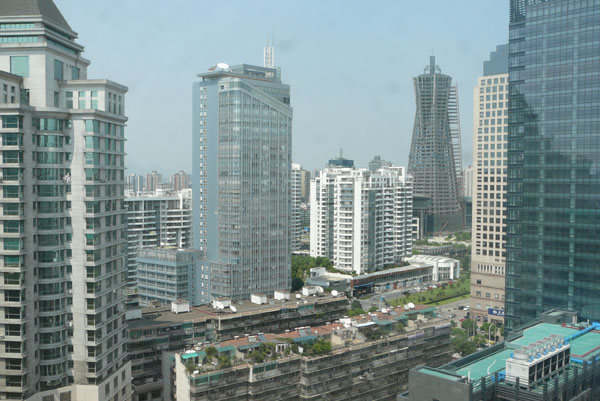
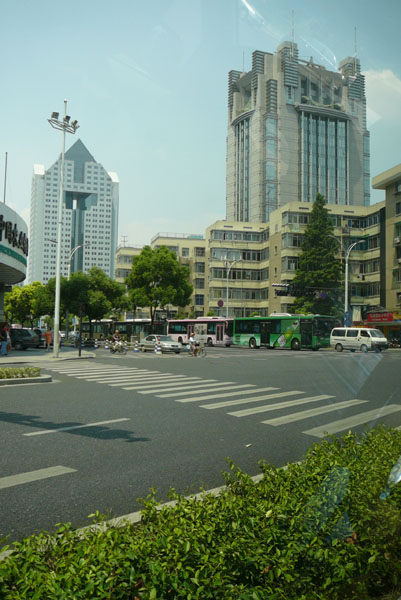
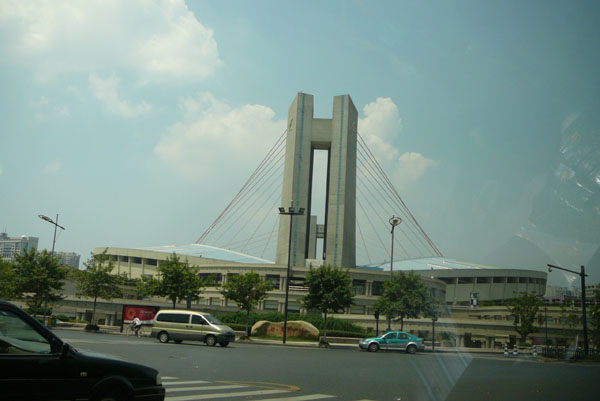
But what made such an impression was the city overall. Clean, organized, pleasant traffic, modern, attractive. Plus the charm of the famous lake. Reminds me of Switzerland where so many cities are close to perfection.

click to enlarge click to enlarge click to enlarge
clean streets – Hangzhou Stadium – sight from Nade Hotel

In Beijing, roads are dirty, sidewalks are a mess, the surface of the roads are often pretty bad and overall the streets are chaotic and messy. Pavements, street dividers, sidewalks, walls, houses all show marks of poor maintenance and the use of doubtful material. Like the thousands of “parking meters”, never used, broken down: the company that made the deal must have some excellent guanxi or what? Compare that to Hangzhou. I suggest Beijing officials in charge of polishing the image of the capital before the 2008 Olympics make a fact finding tour to Hangzhou (without lavish banquets). Let them walk around the city, look at how are the streets are so well maintained, no rusty and broken down fences, damaged lighting, no ugly overhead cables hanging everywhere, good signage (most with English text), modern public transport.
I was given a tour around the city including the industrial and commercial areas. Whaw.
Long way to go really for Beijing. Coming back here, I immediately smelled the pollution, noticed the lack of vivid colors (due to the particles hanging in the air). The mess on the roads – just walk on Gongti Bei Lu.
Returning from a developed country to a much-to develop other country.
Not to wonder Hangzhou gets many top scores in surveys of Chinese cities.

Mongolia: the ultra marathon and more

Back and in one piece, after my adventurous two weeks in Mongolia.
The first week I spent with the group of “Mongolia Sunrise to Sunset” for the ultra marathon (see earlier blog entries with more details). Two groups: one for the 42K and one for the 100K. I left Beijing on 30 June and arrived back in the capital Ulaan Baatar (“UB”) in the late night of 6 July. The I stayed in UB for one week to visit the city and join the “Naadam”, the National Day festivities.
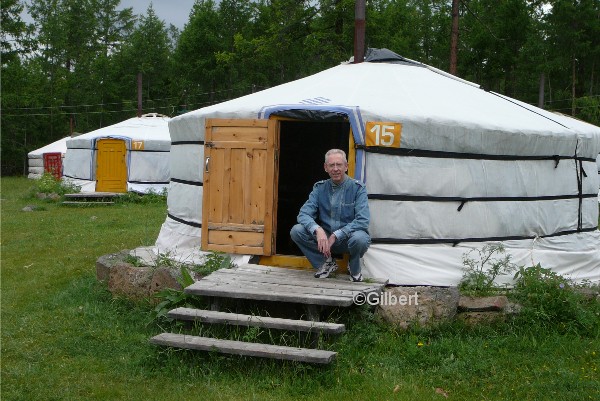
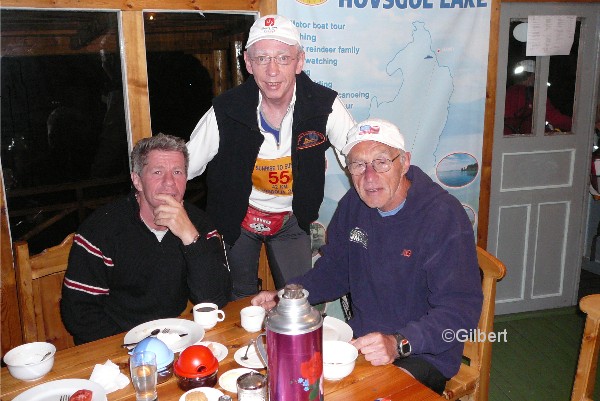
The marathon was held on the shores of Lake Hovsgol, in the northwestern part of Mongolia where we stayed in a “ger” camp “Toilogt Camp”. The ger is the typical circular tent in the country, quite comfortable, with a wood-burning stove in the middle and the chimney that goes through the middle of the roof. I shared mine with a guy from Holland who is working in Sakhalin.

click to enlarge click to enlarge click to enlarge
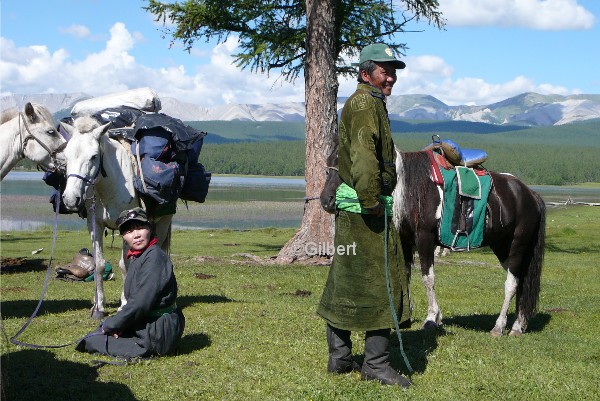
I also rode in a Russian jeep – my ger – horsemen at the camp

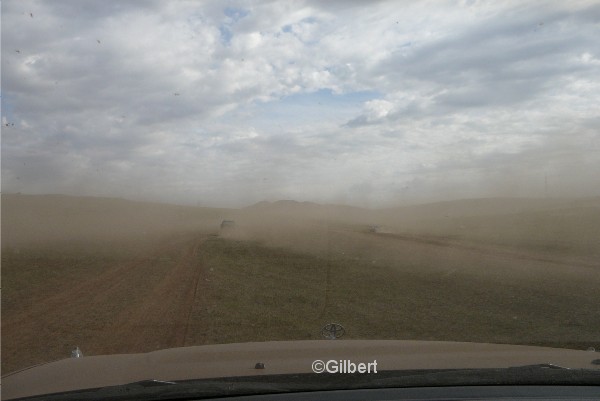
Reaching Toilogt (780 Km from UB) is a genuine back-braking trip by a Russian 4WD or jeep of about 4 to 5 hours from Moron Airport (or “Murun”) – a one hour comfortable flight from UB. The Russian 4WDs look from another century but are surprisingly well adapted to the challenging road conditions – if you can call that a road. No seat belts and speeds of up to 80K/h over gravel, potholes, river beds and dusty grassland.
Lake Hovsgol is situated in a protected natural park. The lake is magnificent and so is the scenery. Situated at an altitude of 1645 m it is one of the largest freshwater lakes: 136 Km long and 36 Km wide with depth up to 262 m – totally 2,620 sq km. It contains over 1% of the world’s fresh water and is connected to Lake Baikal (200 Km further) in neighboring Russia. All around, pine forests, grassland and bare, rocky mountains. In July, day temperatures go up to 30C, nights are fresh with lows of 5C. No problem with the red hot stoves in the gers…
click to enlarge click to enlarge click to enlarge

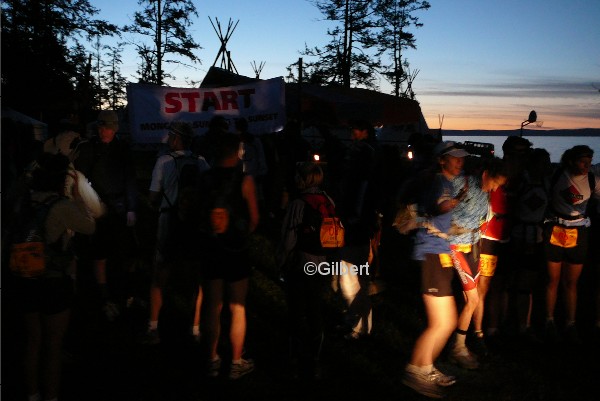
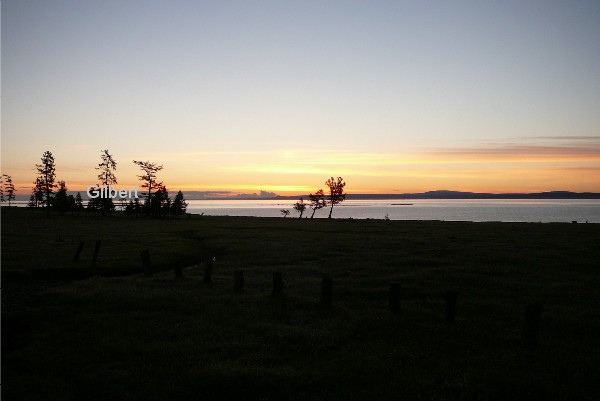
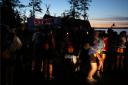
breakfast at 3:30 am – start at 4:30 am – beautiful sunrise at 5 am

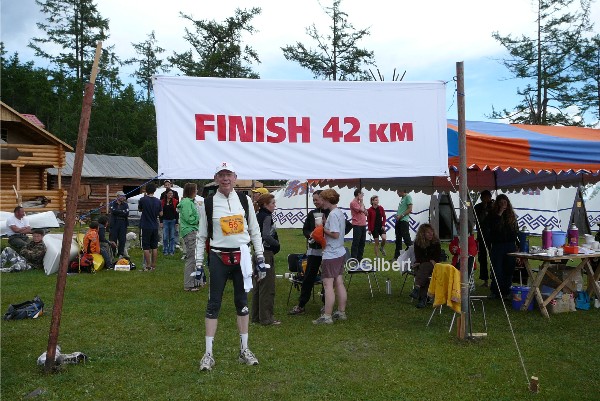
The marathon was tougher than I thought. Rocky trails, through sometimes dense forest with hardly a trail, wetlands, slippery grasslands. Two hills – the first climbing 700 m. Worst was the second one, about 500 m, where I was getting worried to lose my way. The scenery is gorgeous so I frequently stopped for pics and video and took it easy – I did not want to get hurt, sprain an ankle – easy with all the rocks, roots, pebbles. I completed the 42K with last km running, time 8h 33m. Probably next time I could do it in 8h. The race starts in darkness at 4:30 am and we ran with a flashlight through the forest. At 5 am, beautiful sunrise welcomed the runners.
Incredible were the 100K fanatics, they had a further 58K to run. Three foreign ladies finished the grueling race (one in 18 h). Results not available yet on their website.

click to enlarge click to enlarge click to enlarge
at the top of the 1st hill – I made it! – the first 100K runners

The week in UB gave a first impression of the capital where a third (under one million) of Mongolia’s population (under 3 million) lives. The country being as large as Western Europe (over 1.5 million sq km), you can imagine how empty it is.
UB is not your friendly city, it is rather dangerous. The locals, much different from their countryside fellows, look at tourists as walking ATM. In the night many Mongolian men get drunk and love to pick a fight for no reason with any foreigner in sight. Prices are officially and unofficially different for locals and foreigners. Admission prices for tourist attractions can be ten times higher for foreigners. Restaurants and other places will take any opportunity to rip foreigners off, the police being corrupt and useless. That’s the many explanations I got from my gang of Mongolian friends who took care of me… I did see many people drunk and picking a fight. The countryside like around Hovsgol Lake is much more welcoming.
It was a very intense week. Clubbing included. In one of the upscale discos (Metropolis, at the Sky Shopping Center) the police came to close it at 2 am. No problem, we went to another well hidden but well known disco (Brilliant) where we walked out after 5 am.
click to enlarge click to enlarge

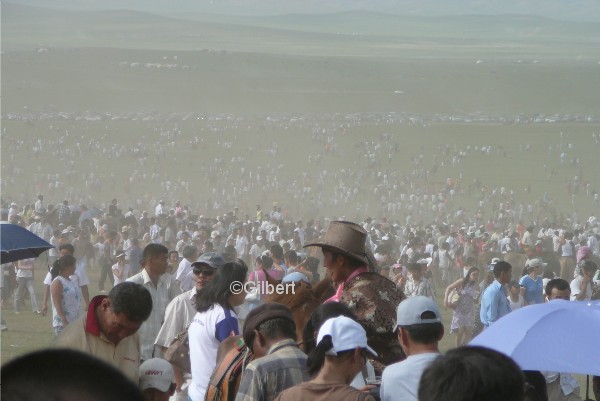
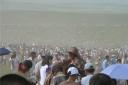
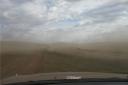
the huge crowd in the grasslands, arrival of the horsemen race – “Mad Max” racing to the location, over one hour ride from UB

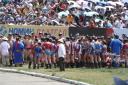
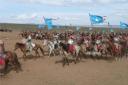
Impressive was watching the arrival of the horse race in the grassland far away from UB’s center. A huge crowd and scenes that reminded me of the movie “Mad Max”. And the Ghinggis Khan Army I run into. Yes, 500 of fiery horsemen. The pics look like taken from a movie.
UB has some interesting museums, a bit old fashioned but a discovery tour in the rich history of Ghinggis Khan who was more than a blood-thirsty invader as we mostly know him. You can also find a small magazine “That’s Ulaanbaatar”, not so flashy as our “That’s Beijing” but it helped me locate some cool spots.
click to enlarge click to enlarge

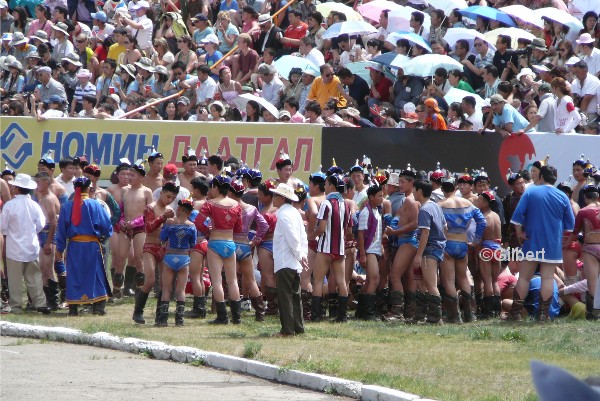
wrestlers at Naadam – the Ghinggis Khan Army

Food is soso, unless you go to one of the several nice foreign restaurants (German, Irish, etc.).
Well, so much to write about. A small book.
Click this link to see some of my 550 pics:
http://homepage.mac.com/bjprc/PhotoAlbum1.html
Enjoy!
Don’t look for me!

Well yes. I am going to disappear for two weeks, starting this Saturday 30 June. heading to somewhere in Mongolia where there is no e-mail and no mobile.
It’s going to be a real adventure. I really need this crazy break and I am curious myself how I am going to go through those two weeks filled with the unknown. Well unknown except for the ultra-marathon at around 2,000 meters. And Mongolia’s National Day celebrations.
The right moment for some extracts of my two favorite Flemish poems from the Middle Ages:
Het daghet inden oosten,
Het lichtet overal.
Hoe luttel weet mijn liefken
Och waer ick henen sal

Egidius, waer bestu bleven?
Mi lanct na di, gheselle mijn!
Du coors die doot, du liets mi tleven.

The energy police: again?

See other article from “Beijing Today” of 16 June: Beijing sends in the energy police
Quick, check the thermostat – the energy police are on patrol. Businesses in Beijing will have to be more aware of their energy use after the city formed a team to monitor energy-saving practices in response to the central government’s calls to cut consumption in big cities, state media reported. It quoted team leader Huang Qian as saying the “energy-saving police” will check if energy consumption in offices, hotels, schools, shopping malls and other big buildings meets national standards. A special phone number has been set up so the public can report buildings that fail to conform to the rules, Xinhua said. End of article.
OK, isn’t that great! But in the usual “transparency” the “special phone number” is not mentioned. For obvious reasons, the former vice mayor kindly and officially explained to me the energy police has no legal power to enforce the regulations. That was in 2006. At least he was one of the few officials to give a clear answer. I doubt today things are better. I’d love to denounce a couple of buildings, especially in winter time when you are dried out by hot air of 28 to 30C. Like in Powerhouse Gym.
As far as I know, the rules-to-be set indoor winter temperatures at 20C max and summer temperatures at 26C max. Yes, I know, hard to imagine in Beijing.

Ambush Marketing: no IOC reaction but…

Some weeks ago I sent an e-mail to the IOC representative in Beijing who ignored twice my request for information. Oh well, I thought she was nice but I guess I was being an optimist. (I have the bad habit of answering e-mails)
The two questions were:
1) how is it possible that companies like Nike, Kangta and Li Ning can cut deals to give outfits to athletes that will use them openly during opening & closing ceremonies and other?
2) on BOCOG’s website, Johnson & Johnson are listed twice, as TOP and as Beijing 2008 Partners. In the meantime, I found the answer – they are indeed in the two categories.
On 16 June 2007 “Beijing Today” reported “BOCOG to prevent ambush marketing”:
The athletes will not be allowed to endorse non-Olympic sponsors during the Olympic Games in order to protect the legal right of the sponsors to benefit from the Games, an official from BOCOG said.
“We won’t allow participating athletes to speak for non-licensed companies during the Olympics. For example, Liu Xiang has to promise not to represent non-official sponsors, even though he is endorsed by Nike, a non-licensed brand,” Chen Feng, vice-director of BOCOG Marketing Department said. BOCOG will do its best to protect the rights and interests of the sponsors and to fight against ambush marketing, which refers to those non-Olympic companies that gain commercial benefits by selling or promoting fake or unauthorized goods associated with the Games.
So far for the article that gives a partial answer to the first question but does not clarify (yet) the deals struck by certain National Olympic Committees to promote Nike, Kangta and Li Ning during the Games, in particular during the Opening Ceremony.