Rotary Training – lots to learn

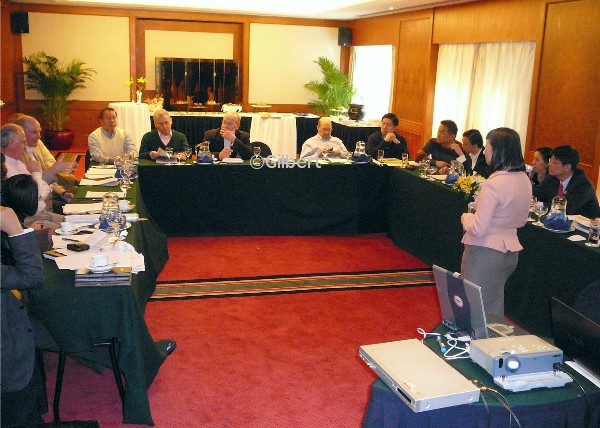
On 10 March the incoming board of next year (Gilbert included) had the chance to assist to a full day training seminar, organized for the Beijing and Shanghai Rotary Clubs.
Training and guidance came from Ambassador Christopher Bo Bramsen (coming from Copenhagen) and Gloria Cheng (coming from Hong Kong).
Present were the presidents of both clubs (Michael Furst and Chee Chin Wu) and the incoming presidents (Mike Ma and Roger Owens).
Gilbert run around with a large sign “I DON’T TALK – SORRY” to explain he had lost his voice due to a nasty flu. At the end of the session he was praised, never having given so “valuable comments”. Haha.
Well, a lot to learn for all of us and also clear we still have much more catching up to do.
The training was held in the Kempinski Hotel and later followed by a dinner in the Hilton Hotel (where Sun joined to make sure Gilbert left timely to return to bed with all his pills).

click to enlarge
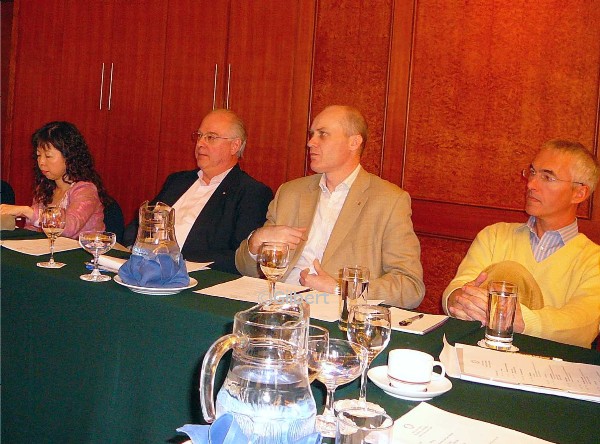
Christopher outlining the important facts
click to enlarge click to enlarge
Andrew Cheng, Serge Dumont & CC Wu – CC Wu, Russ Miller, Roger Owens & John Barnes
click to enlarge click to enlarge
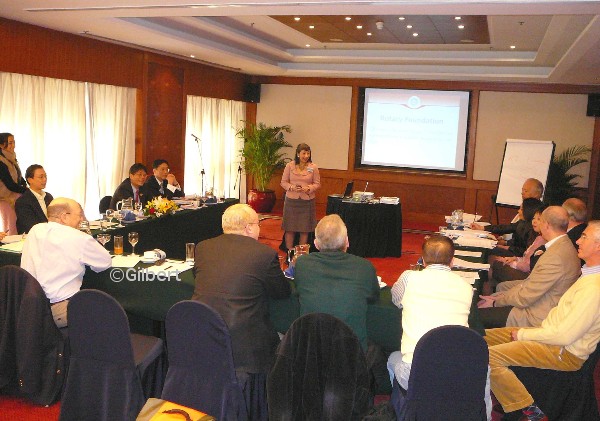
Gloria patiently guided us all through the day.

Thanks to all for the efforts and the good company.

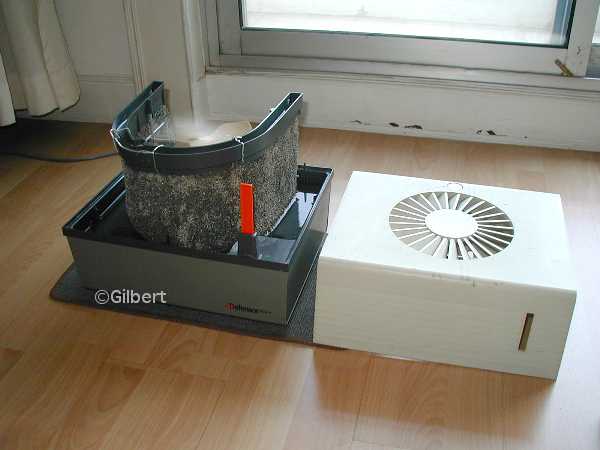
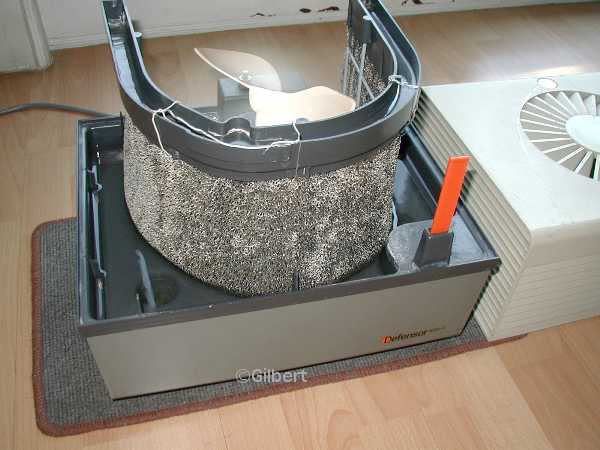
Air humidifiers: Swiss made (Defensor) and China made (Yadu)

The air in Beijing is something you try not to think about. It is 90% of the time horribly dirty and polluted, in summer it is humid and in winter it is dry as hell. If in winter you don’t use a humidifier you get electric shocks from anything you touch and your airways slowly evolve into (dirty) rubber tubes.
But humidifiers are not that easy to use. The worst are those “electronic” ones, so easy and cute but they spray-paint everything inside out with a white film. They love computer screens, plastic bags, CDs, anything. I just wonder how any CD/DVD reader can survive. You open cupboards and even inside you find the white mist.
I tried everything, boiled water, “distilled water”, anything but it seems you still have more than enough minerals in the water to go and cover your CDs.
Best is still the evaporation type where most of the calcium stays inside and the air is also filtered. They consume lots of water when they are well maintained – cleaning them is a big job however.
The Made in Switzerland winner of the bunch: the two DEFENSOR AG (model 500-V) I have for over 25 years. Type: evaporation; through a pump the water drops on the filter where the air is forced through thanks to the fan.
They still look “new” except for the outer covers – thanks to thorough maintenance. The filters are the weak point: they must have beaten all records, 20 years of use while I guess they need to be replaced every one to two years. Maybe I should see if I can still buy them somewhere. Never found an acceptable substitute material.
The only technical problem: one switch died so I short-circuited it and need to unplug it to switch off. The filters have become too thin and I use some small wires to help them hang in the right position.
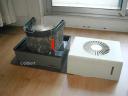
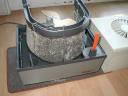
click to enlarge click to enlarge

Cleaning method: the big maintenance is done by removing the fan, cleaning the inside of the pump housing (use pipe cleaner); over 1 L of strong vinegar (> 30%) mixed with warm water, let the pump work for at least 30 min. Filter is soaked in the vinegar separately and washed out innumerous times (the amount of dirt coming out is unbelievable). The whole unit is thoroughly cleaned afterwards. Like this all calcium and dirt is removed. No scratching.
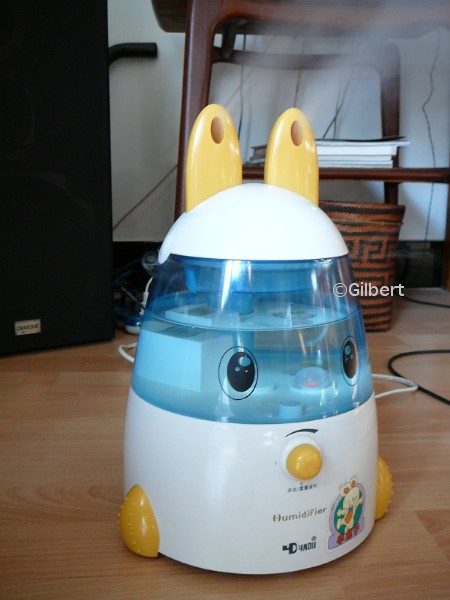
The only other surviving humidifier is Chinese, brand YADU, model YC-E430B. YADU is now Exclusive Supplier for the 2008 Olympics. The model works by boiling water on a small plate and then the mist is blown out through a small fan. I am sure YADU will come up with a more “complicated” technical explanation but that’s basically how it works.
Weak points of the design: most of the minerals and calcium go out with the mist and the system has no air filter as such. Otherwise, very simple to use and small.
The humidifier is one of the many equipment I received, dumped because they either work poorly or people have no clue how to handle them.
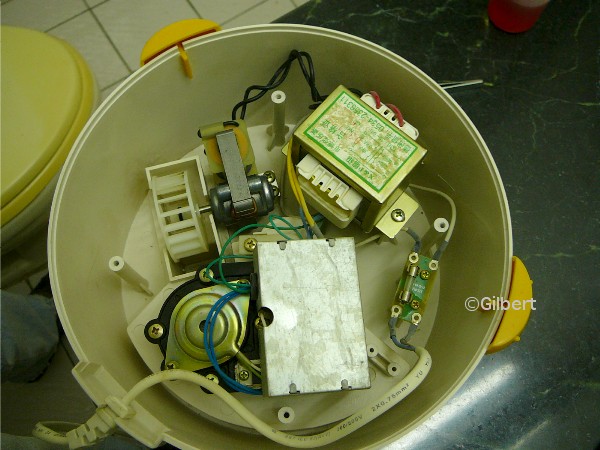
The YADU at first only needed a good cleaning and worked well till it stopped “blowing”. Opening the unit was a bit hard, they use special screws so you can’t open it, well I mean OTHERS can’t open it. The unit is neatly built and even has a fuse inside. The verdict: the electric motor seems to heat up a lot and the lubricant for the rotor axle simply disappeared, so the rotor stopped turning. I dismounted the motor, cleaned all parts, put some grease and … back in business. Yadu needs to address this weak point. For most Chinese consumers they would simply throw away the unit and not think about repairing.
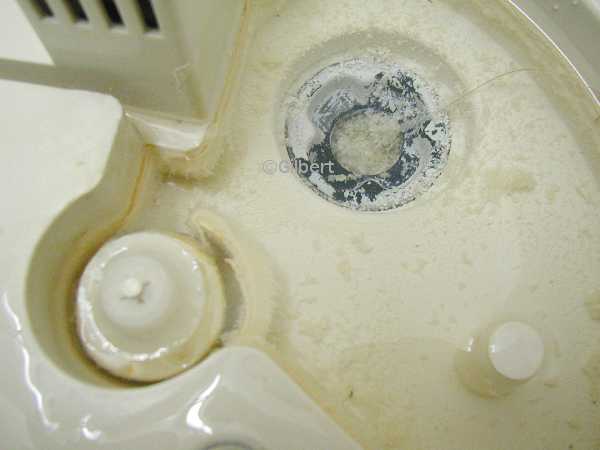
For the water I use hot tap water – cooled down of course. In the hope most of the calcium is gone already. The inside can get very dirty very quickly, with a glue-like deposit and the usual calcium. Cleaning: hot water and the usual vinegar. And careful cleaning up.
At least it works OK and somehow… it’s cute.

click to enlarge click to enlarge click to enlarge
the inside of the YADU – the water can get very dirty – back into service

Anybody has a tip for the water, like some pre-treatment? Could not find anything. Of course I can buy one of those horribly expensive models in Lufthansa Center (with yearly replacement of all kinds of parts…). No plans however to do so. I’ll stick with the vinegar (“dirt cheap”).

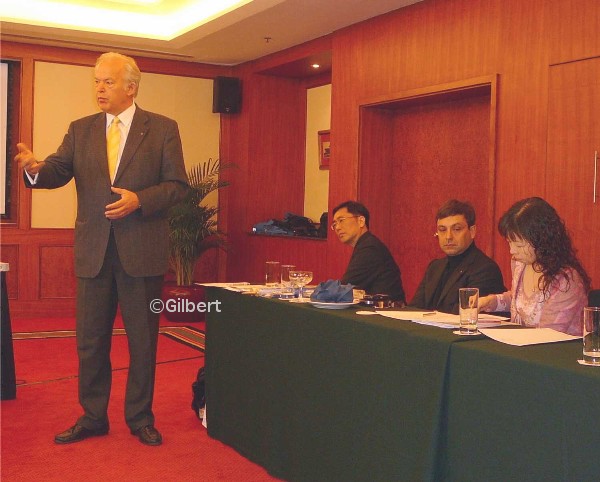
Beijing Rotary Club: Chinese Opera and real estate

Our speakers’ program is quite diverse during our weekly lunch at the Kempinski, every Tuesday.
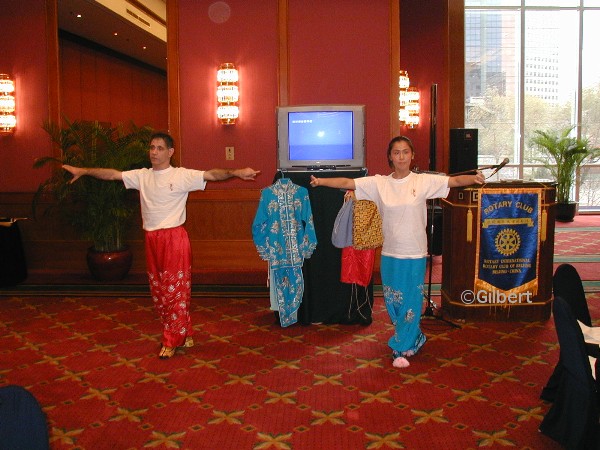
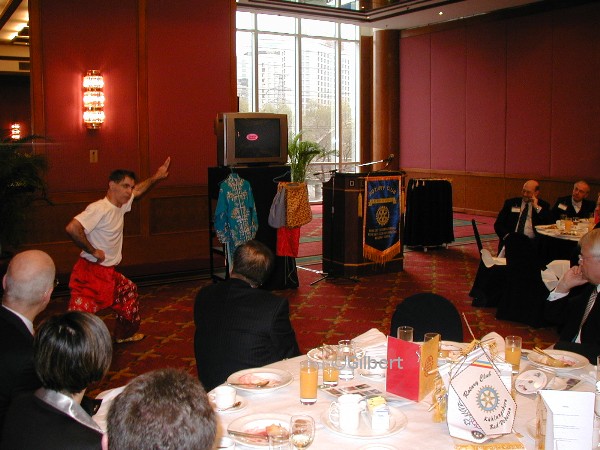
On 12 December 06 we had Ghaffar Pourazar and his partner, giving some insights into the art of Beijing Opera, with demonstrations of some of the basic movements. Interesting to listen to his story, how he got hooked on the art while watching a Chinese opera group in the UK where he was living. He ended up in Beijing, studying Chinese and traditional Chinese opera.
It is often thanks to foreigners like him that Chinese art and traditions bloom again. He went to USA to demonstrate the art and also is involved in a local opera school, see his website www.beijingopera.info

click to enlarge click to enlarge
Ghaffar and his partner explaining the basics of Beijing Opera

Normally we don’t use the Club to promote our own business but sometimes some members give an exciting insight to what brought them to China and what they have been involved with. So on 30 January this year we learned that Rotarian Matt Siu (TCN Beijing Asia Property) has an exceptional track record (we could say, pioneer) in real estate business here in Beijing.

click to enlarge
Matt speaking while Rtn Jim Jack is trying to burglar the Happy Money box

Light sticks: have fun and pollute the environment

The wastage and damage to the environment in China has no limit. Just attend those big sport events, concerts or parties. You all get those funny sticks that flash, shine, blink, glow etc.
Cute.
The only problem is: they are to be used once only and thrown away. Many are of such poor quality they often fail to work. Even if you want to re-use them, difficult. So they mostly all end up in the garbage after the party and obviously, this being China, don’t expect “recycling”.
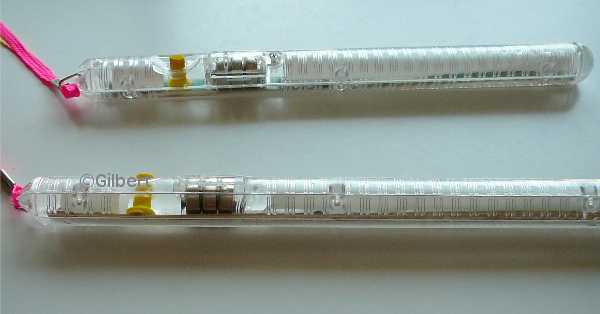
One of the worst examples is what we got attending the New Year Party of the Beijing Development & Reform Commission, see picture.

click to enlarge

The sticks, made of plastic, contain 3 small cell batteries, a small electronic circuit with a switch and LEDs (I think). Works actually well but the problem is they promptly are thrown away and the environmental impact is serious. Just imagine thousands of those ending up in landfills every day. At least I brought them home and will take out the cells if I throw them away.

IKEA Beijing: not 100% quality

One would think that buying at IKEA gives you more reliability. Well, tough luck.
The energy saving lamps I bought there promise the usual – “10,000 hours”. I don’t know really on what planet that might be. Many Chinese similar lamps don’t last long either, but I was hoping IKEA would do better. Maybe like Valerie said, it’s not 10,000 hours of operation, it’s 10,000 hours you HAVE the lamp. They get busted too quickly really. They don’t even mention the color of the “white” light. The IKEA lights turned out to be very yellow and contrast a lot with other Philips energy saving lamps. So, sure not likely to buy them again.
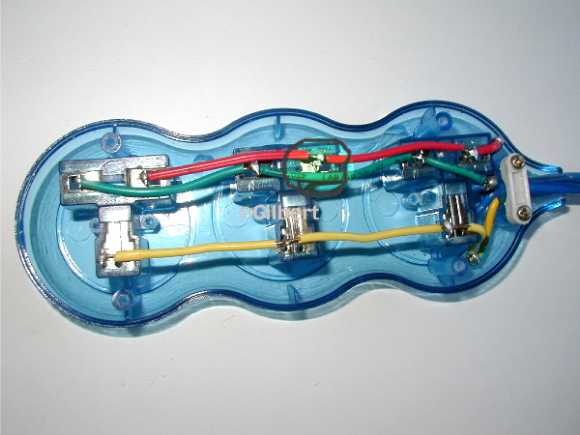
I bought the cute extension cords hoping they would at least work or work better than the usual Chinese crap. Wrong again. At first I blamed the plug. Finally I opened the extension cord and found the middle wire was not soldered to the terminal – the wire was a little too short and jumped off the terminal. Once soldered, in business again

click to enlarge
See the opened extension with the circle around the snapped soldered connection